
2026 April – 01
Adrenaline: The Silent Ally in Survival
By Alan Mann — www.learn-krav-maga.co.za
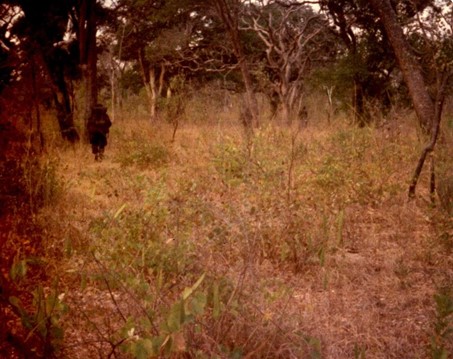
I had passed Selection Course. December 1975, Ops Savanah. The bush was alive with silence. My ‘Hunter Group’ team had been tasked to deliver helicopter fuel to an aerodrome in Serpa Pinto. We knew there was enemy contact ahead as we heard the sound of shooting and mortar shells being dropped in the area not too far from us. We couldn’t take the road into the town so I decided that we should go through the bush and around the outskirts of the town. As we moved closer to the objective, the rounds swishing in the air above told us from which direction and how far away the enemy was. As we moved towards our target, moving through terrain that seemed to breathe with its own tension, we had just crossed our last line of cover from fire when, without warning, our world erupted, gunfire cracked, dust flew up, and the ambush was on us.
In that instant, adrenaline surged like fire through my veins. My heart hammered, my vision sharpened, and time seemed to slow. What outsiders call “panic” was, for us, precision. Every movement, dropping prone, scanning arcs, returning low fire was guided not by conscious thought, but by training and instinct amplified by the adrenaline. Our return fire was very accurate.
The Science Behind the Surge
Adrenaline is the body’s survival hormone. It primes muscles, sharpens senses, and floods us with energy. In combat, it’s the difference between hesitation and action. But adrenaline doesn’t act alone, it works hand in hand with fear, the quiet signal that tells us danger is near before the first shot is fired.
Fear as Intelligence
Gavin de Becker’s The Gift of Fear captures this truth perfectly. He argues that fear is not weakness, it’s data. It’s the body’s way of processing subtle cues faster than the conscious mind. In the field, I learned that lesson repeatedly. At other times, fear whispered, adrenaline shouted, and together they kept us alive.
De Becker distinguishes fear from worry. Worry is abstract, a mental loop of “what ifs.” Fear is immediate, specific, and actionable. In an ambush, there’s no room for worry. Fear says, “Move now.” Adrenaline makes sure you can.
Survival Signals in Combat
De Becker identifies behaviours that precede violence, ignoring boundaries, refusing to accept “no,” or showing unwarranted persistence. In operations, those signals were everywhere.
Beyond the Battlefield
Adrenaline isn’t confined to combat. Athletes, performers, and adventurers all harness it. But for soldiers, adrenaline is more than a thrill, it’s a lifeline. It’s what allows you to act decisively when hesitation could mean death. And when paired with the gift of fear, it becomes a compass, pointing toward survival.
The Lesson
My career in the military taught me that survival isn’t about being fearless it’s about respecting fear. Adrenaline is the body’s messenger, fear the message. Together, they remind us that intuition is rarely wrong.
De Becker’s words echo my own experience: fear is a gift. In combat, in life, in every moment where danger lurks unseen, adrenaline and fear are not enemies to be conquered they are allies to be trusted.
Closing thought:
Adrenaline is the roar, fear the whisper. In the chaos of an ambush or the quiet unease of a city street, they speak the same truth: trust yourself. Because survival begins the moment you listen.
The overwhelming effect of a first-time adrenaline dump
This can be managed with immediate calming techniques like controlled breathing and grounding, followed by long-term resilience practices such as consistent Krav Maga training and mindfulness. The key is to train your body and mind to recognize the surge, interrupt the stress response, and recover effectively.
Immediate Techniques During an Adrenaline Dump
When adrenaline floods your system for the first time, the symptoms (racing heart, trembling, sweating, tunnel vision) can feel overpowering. These strategies help regain control:
Deep Breathing (4-7-8 method): Inhale for 4 seconds, hold for 7, exhale for 8. This slows heart rate and signals the parasympathetic nervous system to calm down.
Grounding (5-4-3-2-1 technique): Identify 5 things you see, 4 you feel, 3 you hear, 2 you smell, 1 you taste. These pulls focus away from panic and back into the present.
Progressive Muscle Relaxation: Tense and release muscle groups to counteract shaking and restore physical control.
Controlled Movement: If possible, walk or stretch lightly. Physical activity helps metabolize excess adrenaline.