
2026 February – 01
The Bobo Doll Experiment and Its Lessons for Self-Defence
By Alan Mann — www.learn-krav-maga.co.za
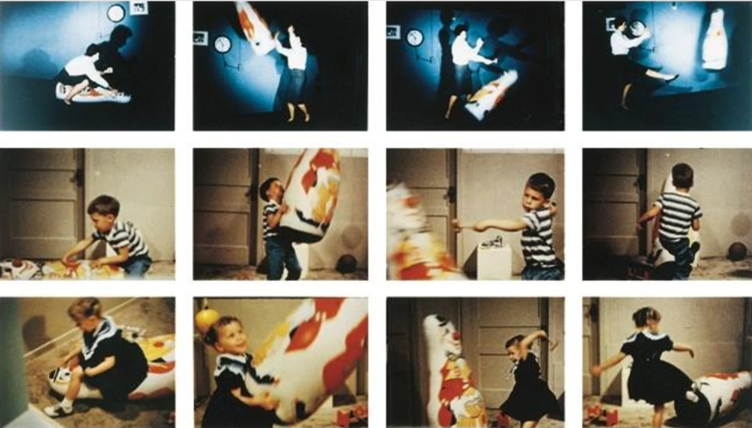
In the early 1960s, Albert Bandura conducted what became one of the most influential studies in behavioural science: the Bobo Doll Experiment. Children observed adults behaving aggressively towards an inflatable doll…hitting, kicking, and shouting and many went on to imitate those actions themselves. The study demonstrated the powerful role of modelling: people, especially the young, learn behaviours by watching others.
While the experiment is often discussed in the context of aggression and childhood development, its insights can be applied in a very different and constructive arena, self-defence.
Learning Through Observation
Self-defence is not merely about physical techniques; it is about courage, awareness, and preparedness. Just as children in Bandura’s study copied aggressive behaviour, students of self-defence can benefit from observing positive role models:
- Watching skilled instructors calmly demonstrate defensive moves.
- Observing how composure and restraint are maintained under pressure.
- Learning that controlled responses, not uncontrolled aggression, are the mark of true strength.
Redirecting Aggression into Discipline
The Bobo Doll Experiment showed that aggression can be contagious. In self-defence, the challenge is to redirect that energy into discipline and constructive practice:
- Controlled strikes: Practising all punches or blocks with precision rather than anger.
- Structured drills: Repetition builds muscle memory, turning instinctive reactions into measured responses.
- Respectful training: Reinforcing that techniques are for protection, not provocation.
Building a Culture of Responsibility
Self-defence classes often emphasise responsibility alongside technique. The lessons from Bandura’s experiment remind us that what we model matters:
- Instructors set the tone by demonstrating restraint and respect.
- Students learn that self-defence is about safety, not dominance.
Conclusion
Albert Bandura’s Bobo Doll Experiment highlighted the ease with which aggression can spread through imitation. In the realm of self-defence, this knowledge can be harnessed positively: by modelling calm, controlled, and responsible behaviour, instructors can ensure that learners absorb not only the physical skills but also the values of discipline, and protection.
Self-defence, then, becomes more than a set of techniques, it becomes a philosophy of strength without anger